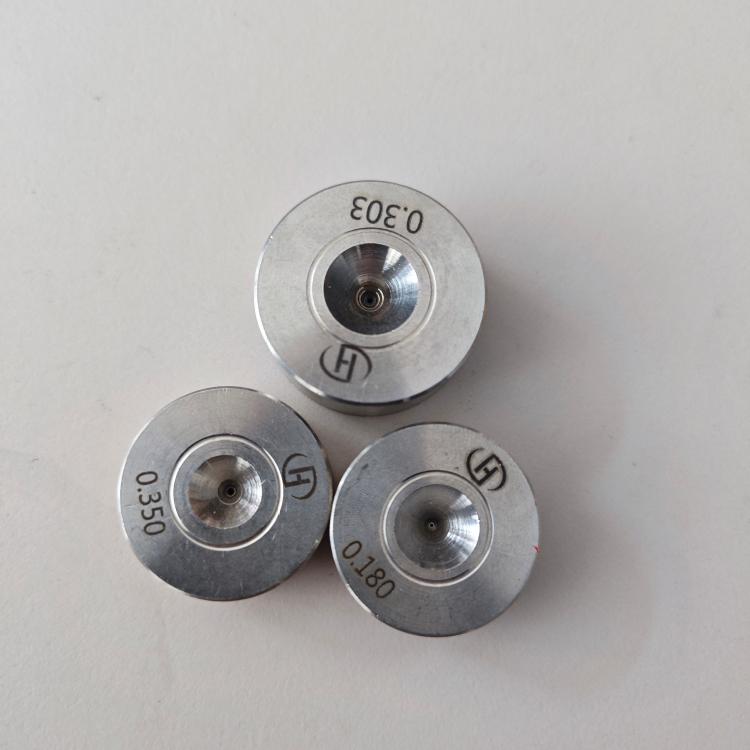
1. Entrance and Exit Angles
The entrance angle (typically 12–18° for steel) directs metal flow into the die, minimizing friction. A steeper angle suits harder materials like stainless steel, while shallower angles (6–10°) for exit zones prevent wire marking. PCD dies, known for wear resistance, often use sharper angles for high-speed applications.
2. Bearing Length
This section stabilizes the wire during drawing. Longer bearings (2–4x wire diameter) improve surface finish but increase friction. For Stainless Steel Wire Drawing Dies, shorter bearings reduce heat buildup. PCD dies, with inherent hardness, tolerate longer bearings without premature wear.
3. Reduction Ratio
Aim for a 15–25% reduction per pass to balance productivity and die stress. Aggressive ratios (>30%) risk die cracking, especially in stainless steel. PCD dies handle higher ratios due to superior thermal stability.
4. Die Diameter Tolerance
Strict tolerances (±0.005mm) prevent wire eccentricity. Regularly measure die bores with precision gauges, as wear alters dimensions. Stainless steel dies may require frequent recalibration due to material adhesion.
5. Cooling Channels
For high-volume operations, integrate internal cooling in PCD dies to manage heat. Stainless steel dies benefit from external air jets to reduce friction.
By aligning die geometry with material properties and operational demands, manufacturers optimize tool life and product quality. Regularly inspect worn areas and adjust parameters to maintain peak performance.