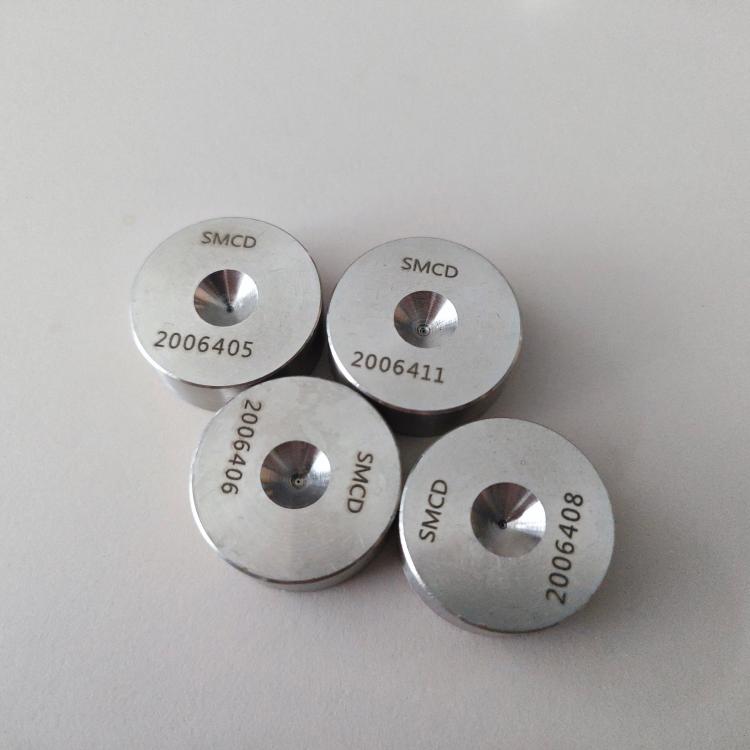
Processing temperature control is pivotal for optimizing performance and longevity of PCD Wire Drawing Dies, Natural Diamond Wire Drawing Dies, and Nickel Wire Drawing Dies. PCD dies, with thermal stability up to 650°C, leverage cobalt-based composites for enhanced heat dissipation during high-speed stainless steel or alloy wire drawing. Real-time monitoring via infrared sensors prevents overheating-induced wear, ensuring consistent die life.
Natural Diamond Dies, ideal for ultra-fine wires (<1.2mm), demand precise temperature management due to anisotropic hardness and brittleness. Non-contact laser interferometry verifies dimensional accuracy, while controlled cooling minimizes thermal stress fractures.
Nickel Dies, susceptible to oxidation above 200°C, rely on efficient cooling systems—water-based or lubricant circulation—to maintain optimal temperatures during multi-pass drawing. Advanced sensors enable real-time tracking, reducing deformation risks.
Proactive strategies, including routine maintenance, material-specific cooling protocols, and AI-driven predictive monitoring, extend die life and enhance process consistency. As industries prioritize precision and efficiency, integrating these temperature control methodologies becomes essential for sustainable wire drawing operations, ensuring minimal downtime and optimized resource use.
Nickel Dies, susceptible to oxidation above 200°C, rely on efficient cooling systems—water-based or lubricant circulation—to maintain optimal temperatures during multi-pass drawing. Advanced sensors enable real-time tracking, reducing deformation risks.
Proactive strategies, including routine maintenance, material-specific cooling protocols, and AI-driven predictive monitoring, extend die life and enhance process consistency. As industries prioritize precision and efficiency, integrating these temperature control methodologies becomes essential for sustainable wire drawing operations, ensuring minimal downtime and optimized resource use.