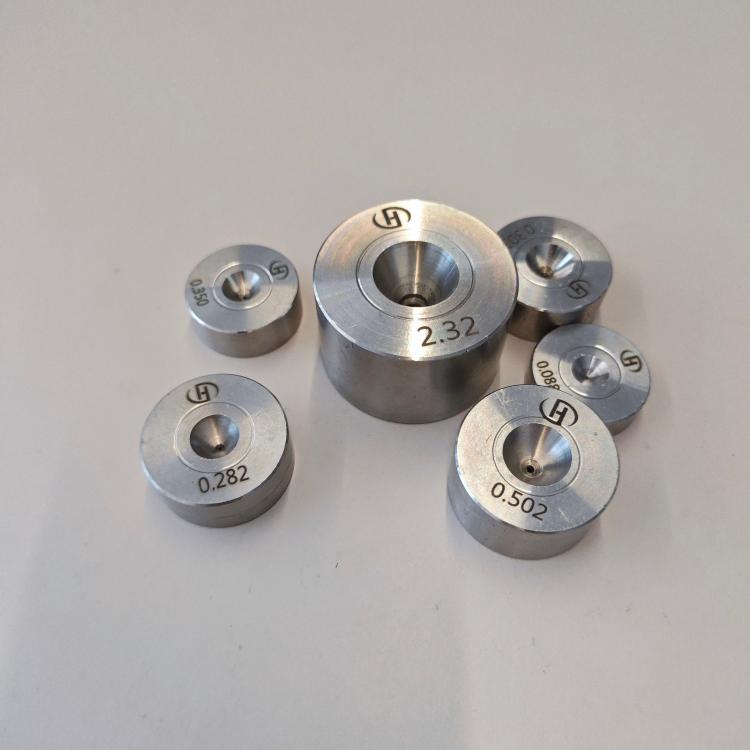
Choosing quality Galvanized Wire Drawing Dies is pivotal for wire processing efficiency and product precision. Many buyers fall prey to substandard products due to vague cognition of Wire Drawing Dies variants. Grasping core selection criteria and component differences can effectively avoid costly mistakes.
First, clarify application scenarios. Galvanized Wire Drawing Dies excel in processing high-demand galvanized wires, with zinc-plated surfaces reducing friction and preventing wire adhesion. Unlike ordinary carbide dies, they resist corrosion from galvanizing agents, but not all models suit heavy-duty work. For fine wire or high-precision tasks, PCD Wire Drawing Dies (polycrystalline diamond) are superior—their exceptional hardness ensures stable dimensional accuracy and 5-8 times longer lifespan than galvanized counterparts.
Avoid three common pitfalls: prioritize core (die core) quality over price, as inferior cores cause wire scratches; verify plating thickness (0.02-0.05mm is optimal) to prevent peeling; match die specifications with wire material (e.g., thick steel wires need higher-toughness dies).
Balance cost and performance. Galvanized dies are cost-effective for regular galvanized wire production, while PCD dies suit high-volume, precision-focused lines. Request sample tests before bulk purchases to check wear resistance and wire surface finish. Following these tips ensures you select suitable Wire Drawing Dies, boosting productivity and reducing maintenance costs.