

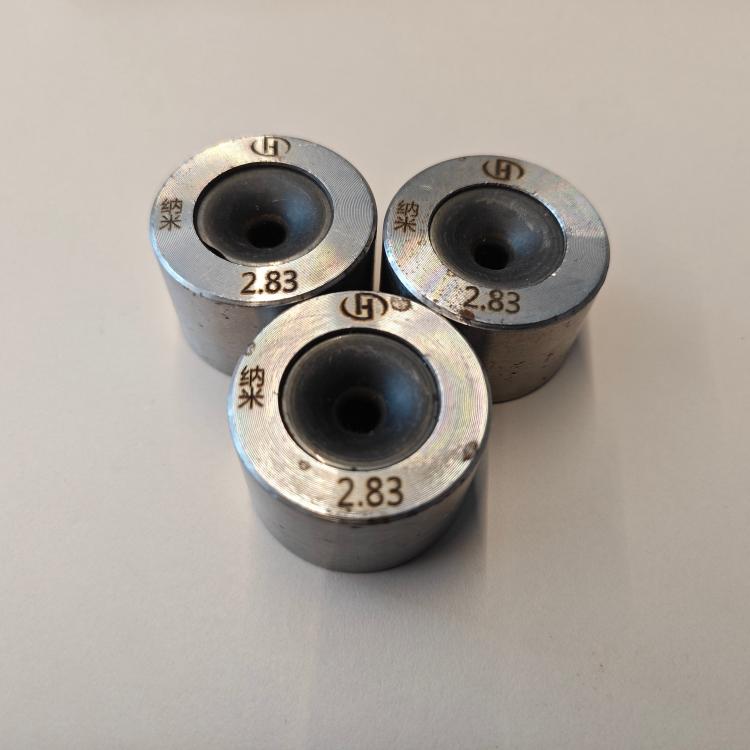
High-Durability Dies for Ultra-Thin Nano Wire Production
In the high-stakes world of ultra-thin nano wire production, one thing is certain: if your wire’s thinner than a hair and twice as fragile, your die better be tougher than a superhero’s ego. Enter the *PCD Wire Drawing Dies*—the unsung heroes (or villains, depending on your morning coffee) of micro-engineering.
These little titanium-tough marvels, made from Polycrystalline Diamond (PCD), are the reason we can now stretch wires so thin they make spider silk look chunky. Imagine trying to thread a needle with a strand of light—except this needle is a die that doesn’t even flinch when you're pulling a wire thinner than a molecule’s lunch break. It’s like giving a diamond a job in a factory, but instead of jewelry, it’s making nanowires for quantum computers, medical sensors, and possibly the next generation of space-age spaghetti.
But here’s where things get spicy. The “nano wire drawing die” market has become a battlefield of ego, precision, and the occasional existential crisis. Engineers spend more time whispering sweet nothings to their dies than to their partners. “Be gentle,” they plead, adjusting micron-level tolerances. “I know you’re tough, but please don’t crack under pressure… or at least not before I finish my third espresso.”
And let’s talk durability. These PCD dies survive temperatures hotter than a dragon’s sneeze, pressures that would flatten a mountain, and stress levels that would break a normal person. They’ve been tested in labs where the air hums with tension and the only sound louder than the machinery is the quiet scream of an engineer realizing they forgot to calibrate the die.
Still, every once in a while, a rogue nano wire slips through—too thin, too fast, too dramatic—and the die gives up. Not with a bang, but with a silent, dignified *click*. Then comes the post-mortem: “It wasn’t the wire… it was the *alignment*.” Or maybe just “We were out of coffee.”
So here’s to the PCD dies—the diamond-encased workhorses of the nano age. They don’t care about fame, awards, or social media likes. They just want to keep pulling those tiny, impossible wires without breaking a sweat. And honestly? We’re all just glad they don’t have a side hustle in stand-up comedy.
Innovative Die Technology Enabling Nanoscale Wire Consistency
In the high-stakes world of nanotechnology, where wires are thinner than a giraffe’s eyelash and more precise than a comedian’s timing, innovation is king. Enter the **nano wire drawing die**—a tiny, titanium-tough marvel that pulls wires so fine they make spider silk look like bungee cord. But here’s the twist: even these minuscule miracles need a little help from their friends.
Enter the **Natural Diamond Wire Drawing Die**, because nothing says “precision” like squeezing metal through a gemstone forged in the heart of a meteorite. Yes, you read that right—diamonds aren’t just for engagement rings anymore. They’re now the unsung heroes of nanoscale manufacturing, guiding tungsten filaments through microscopic tunnels with the grace of a ballet dancer on espresso.
Scientists at the Global Nanowire Lab (GNL) recently unveiled their latest breakthrough: dies so advanced, they can draw wires 100 nanometers wide—about 1/10th the width of a red blood cell. But as one engineer joked, “We’re not just making wires; we’re doing yoga with atoms.” The real challenge? Keeping the diamond die from getting *too* proud. “It’s like asking a diamond to stay humble,” said Dr. Lila Quartz, lead materials scientist. “One day it’ll start charging extra for ‘premium polishing’.”
These dies don’t just work—they *perform*. With near-zero wear and flawless surface finish, they ensure consistency across billions of nanowires. No more "wire tantrums" where a single kink ruins an entire quantum chip. It’s like having a GPS for electrons.
And yes, the natural diamond version is pricey—more than a vintage sports car—but when your product depends on atomic-level precision, you don’t skimp on the sparkly tools. “Why use synthetic?” asked a grinning technician. “This diamond was born under pressure—just like our deadlines.”
So next time you marvel at a smartphone’s sleek design or a solar panel’s efficiency, remember: somewhere, a tiny diamond is quietly pulling wires thinner than your imagination—and probably judging your life choices.
After all, in the world of nanotech, even the smallest die has the biggest ego.