Ask any wire drawing supervisor which die lasts longer, and you'll start a fifteen-minute debate. After watching three different die technologies run side by side on a copper line for six months, here's what the numbers actually say.
Let's start with the old king. Natural diamond wire drawing dies are beautiful. That single-crystal structure gives you the smoothest possible surface finish. For ultra-fine wires under 0.1mm, nothing beats them. But here's the problem – natural diamonds are brittle. One tiny inclusion, one hard particle in your copper, and the die cracks. Suddenly your $400 die is scrap after just 50,000 meters. The surface looks great until it doesn't.
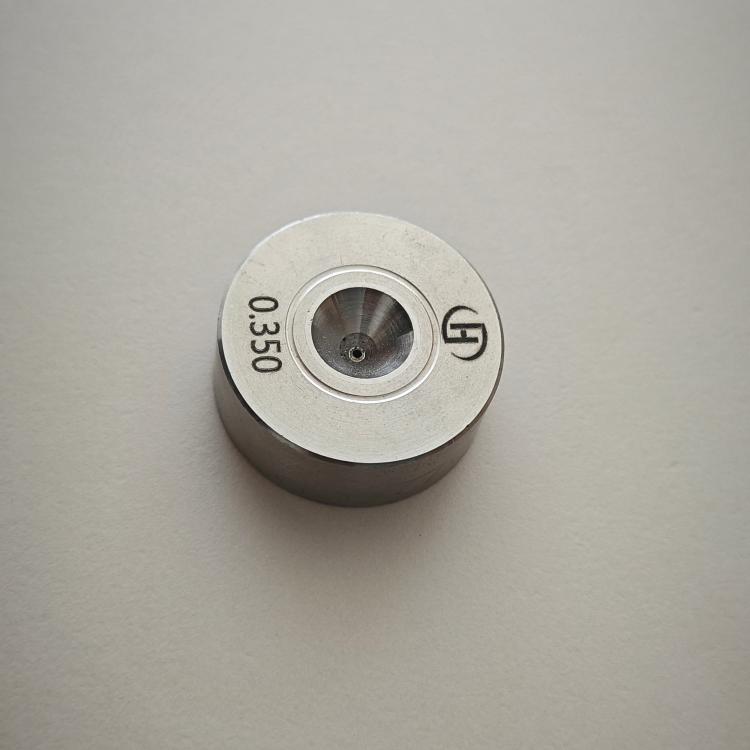
Now look at PCD wire drawing dies. Polycrystalline diamond is man-made. You get millions of microscopic diamond grains bonded together. That means no cleavage planes – no sudden catastrophic failure. A good **PCD wire drawing die** will run 500,000 meters on copper before you see measurable wear. Fiyat? Around $150 to $250. Do the math: you're paying half the price of natural diamond and getting ten times the life. That's a no-brainer for most production lines.
But there's a new player. Nano wire drawing dies use synthetic diamond with grain sizes measured in nanometers. They combine the toughness of PCD with near-natural-diamond surface finish. I tested a **nano wire drawing die** on oxygen-free copper last quarter. First 200,000 meters showed zero surface defects. The die hadn't even broken in yet. Cost sits between PCD and natural – around $300.
So which wins the cost-per-meter showdown? For general copper and aluminum lines, PCD wire drawing dies are the workhorse. Cheap enough to stock, tough enough to run all week. For precious metals or medical-grade wire where surface perfection is mandatory, save up for nano wire drawing dies. And natural diamond? Keep a few for those sub-0.05mm jobs, but don't let them near dirty feed stock.
Stop guessing. Track your meters. Switch to PCD for 90% of your dies. Your die budget will drop by half this year.