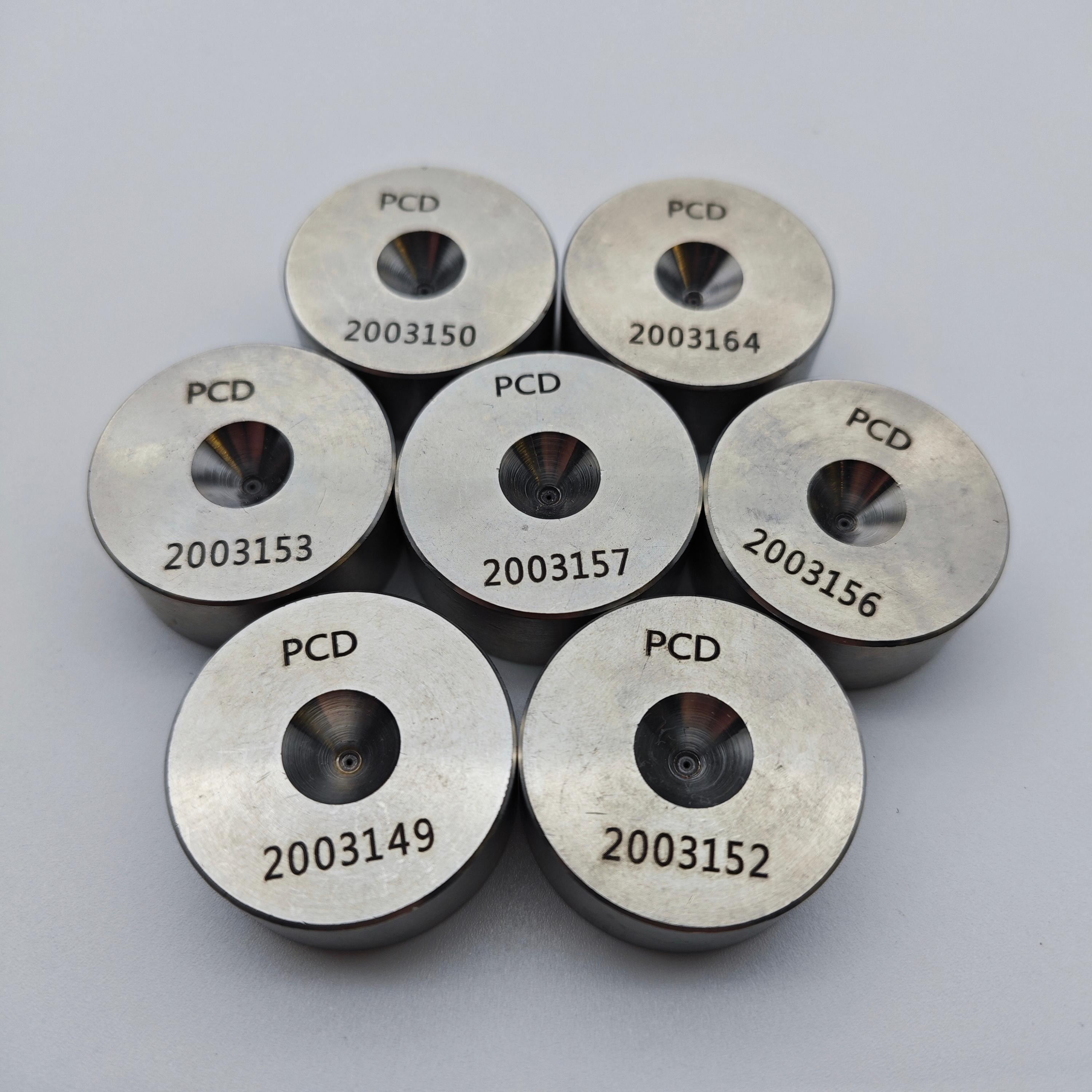
Wire drawing dies are critical components in metal processing industries, and selecting the right type—whether PCD (Polycrystalline Diamond), Nano Wire Drawing Dies, or Natural Diamond Wire Drawing Dies—can significantly impact product quality and operational efficiency. However, troubleshooting issues with these dies requires a nuanced approach tailored to their unique properties. Below, we outline key strategies for maintaining optimal performance across die types.
1. PCD Wire Drawing Dies: Addressing Wear and Surface Defects
PCD dies are renowned for their durability and cost-effectiveness in high-volume production. Common issues include premature wear, surface roughness, or dimensional inconsistencies.
- Check Lubrication: Inadequate lubrication can cause thermal stress, leading to micro-cracks. Ensure proper coolant flow and viscosity.
- Inspect Die Geometry: Use a high-precision microscope to detect edge chipping or bore deformation. PCD’s layered structure may delaminate under excessive pressure.
- Material Compatibility: Verify that the wire material (e.g., copper, steel) aligns with the die’s abrasion resistance rating. Harder alloys may require a coarser grain PCD.
2. Nano Wire Drawing Dies: Managing Microscopic Flaws
Nano diamond-coated dies excel in ultrafine wire applications (e.g., electronics, medical devices) but are susceptible to sub-surface defects.
- Monitor Coating Integrity: Use scanning electron microscopy (SEM) to identify voids or uneven coating layers, which can lead to particle shedding.
- Optimize Drawing Speed: Excessive speed generates heat, degrading the nano-coating. Gradually increase speed while monitoring surface finish.
- Cleanliness is Key: Contaminants like metal dust can embed into the nano-layer. Implement ultrasonic cleaning protocols between batches.
3. Natural Diamond Wire Drawing Dies: Preventing Brittle Fractures
Natural diamond dies deliver unmatched precision for critical applications but are prone to brittle fractures due to their inherent hardness.
- Avoid Mechanical Shock: Sudden tension changes or misalignment can crack the die. Use vibration-dampened mounts and precise wire guides.
- Temperature Control: Natural diamond expands minimally but can fracture under rapid thermal shifts. Maintain ambient temperature stability.
- Regular Polishing: Minor scratches worsen quickly. Polish the die bore with diamond paste to restore surface smoothness.
Proactive Maintenance for All Die Types
- Record Operational Data: Track drawing speed, wire tension, and lubrication parameters to identify patterns in die failure.
- Train Operators: Misalignment during installation causes 30% of premature failures. Ensure staff follow torque specifications and alignment protocols.
- Collaborate with Suppliers: Work with trusted manufacturers to customize dies for specific materials or operational conditions.
Choosing the Right Die
- PCD: Ideal for mid-to-high volume production with hard wires.
- Nano Diamond: Best for ultrafine wires requiring micron-level precision.
- Natural Diamond: Reserved for ultra-high-precision tasks where cost is secondary.
By addressing these challenges with targeted solutions, manufacturers can extend die lifespan, reduce downtime, and achieve consistent wire quality. Always prioritize collaboration with technical experts to tailor troubleshooting strategies to your production environment.