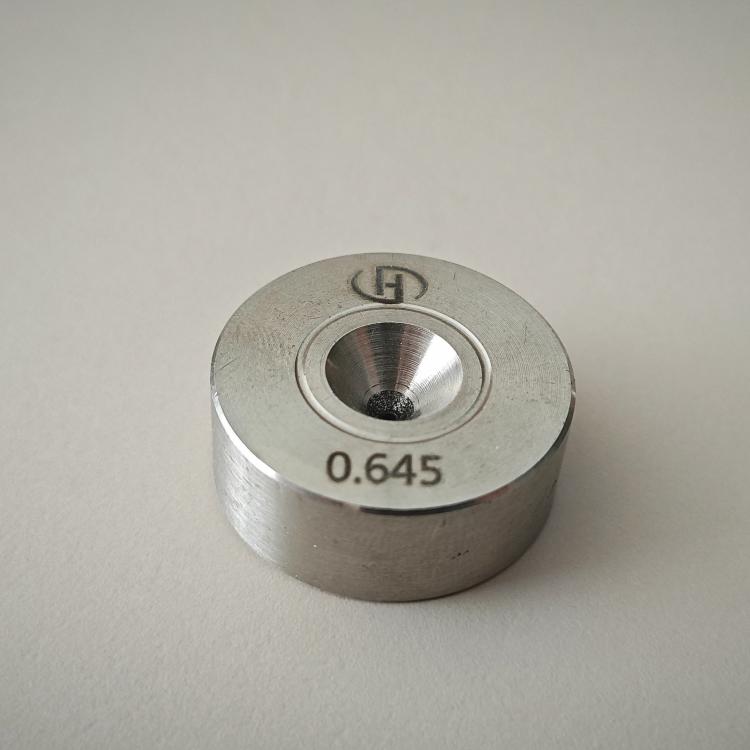
Step 1: Preparation & Safety Checks
Before replacing dies, shut down the drawing machine and disconnect power sources. Use protective gloves and eyewear to avoid injury from sharp edges or wire splinters. Confirm the new die’s specifications match the application requirements, including wire diameter, material, and compression ratio.
Step 2: Die Removal
Loosen mounting bolts securing the die assembly. Carefully extract the worn die using a non-marring tool to prevent damage to the die holder. Inspect the holder for debris or scoring, which could affect alignment. Clean with a soft cloth and isopropyl alcohol.
Step 3: Installing the New Die
Align the replacement die’s entry angle with the holder’s exit channel. For natural diamond dies, ensure the diamond layer faces the incoming wire to maximize wear protection. Tighten bolts progressively in a crisscross pattern to avoid uneven pressure. Verify concentricity using a dial indicator—radial runout should not exceed 0.002mm.
Step 4: Testing & Calibration
Re-energize the machine and perform a test run with scrap material. Monitor wire surface quality, dimensional accuracy, and die wear patterns. Adjust draw speed or lubrication parameters if necessary. Document performance metrics for future maintenance planning.
When to Consider PCD Alternatives
While natural diamonds excel in extreme wear environments, PCD (Polycrystalline Diamond) wire drawing dies offer a cost-effective solution for moderate-duty applications. PCD dies provide comparable hardness with improved toughness, reducing chipping risks in intermittent operations. Evaluate total cost of ownership when selecting between materials.
Pro Tip
Extend die lifespan by implementing a preventive maintenance schedule. Regularly inspect dies for chipping, cracking, or excessive wear. Maintain cooling systems to prevent thermal damage, and use high-quality lubricants to minimize friction.
Conclusion
Mastering die replacement ensures uninterrupted production and optimal wire quality. By understanding material trade-offs and adhering to precision installation practices, manufacturers can balance performance, cost, and longevity in their wire drawing operations. Always consult equipment manuals and follow OEM guidelines for die-specific procedures.