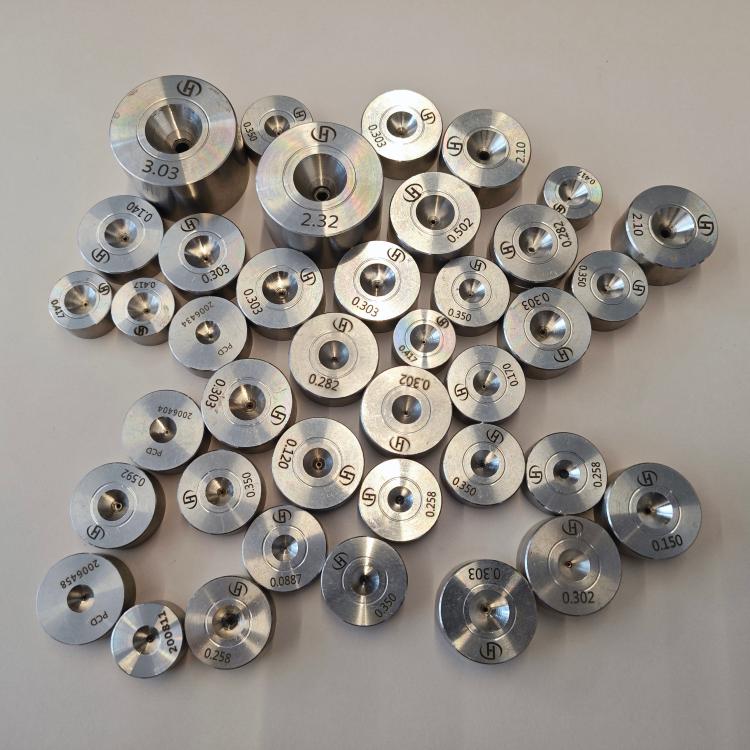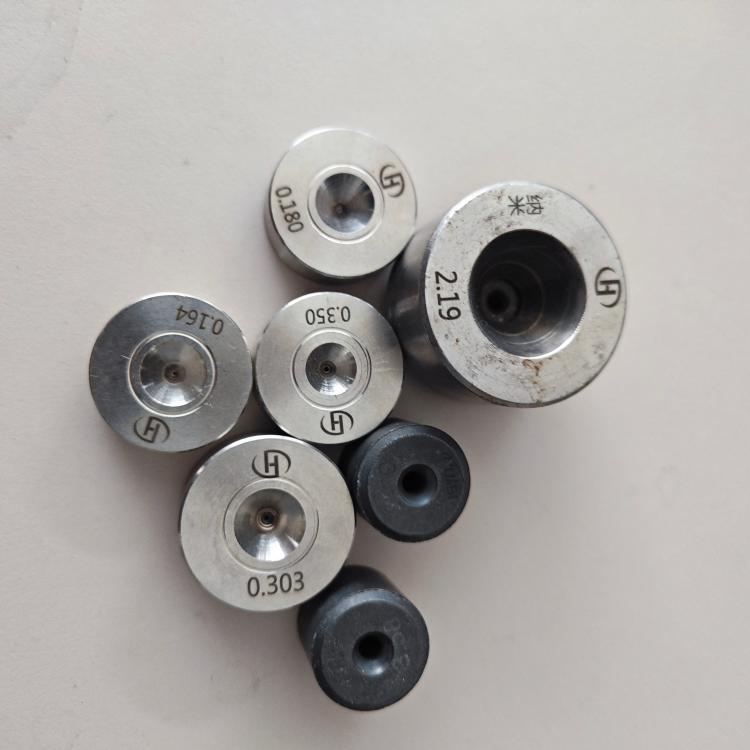
Stainless steel wire drawing dies are critical components in manufacturing high-quality wires for industries ranging from automotive to medical devices. These dies shape and refine stainless steel wire by pulling it through progressively smaller openings, ensuring precise dimensions and surface finishes. The choice of die materials directly impacts efficiency, durability, and output quality.
1. Stainless Steel Wire Drawing Dies
Stainless steel wire drawing dies require materials that withstand extreme friction, heat, and corrosion. Tungsten carbide (WC) is widely used due to its exceptional hardness and wear resistance. For high-precision applications, polycrystalline diamond (PCD) or natural diamond dies are preferred, especially for ultrafine wires (e.g., ≤0.008mm). These materials ensure smooth surface finishes and extended die life, even when processing tough alloys like 316L or 304 stainless steel.
2. Wire Drawing Dies: Material Advancements
Traditional wire drawing dies for general applications often use tungsten carbide with cobalt or nickel binders to enhance toughness. However, advanced alloys and coatings are gaining traction. For instance, titanium alloy casings are employed in tin-coated dies to improve heat dissipation and corrosion resistance. Additionally, synthetic diamond dies are increasingly adopted for high-speed drawing of hard materials like stainless steel, reducing downtime and maintenance costs.
3. Increased Length Wire Drawing Dies
To meet demands for longer, continuous wire production, manufacturers are optimizing die designs. Extended-length dies incorporate precision-engineered reduction angles (e.g., 14°–16° for stainless steel) and lubrication zones to minimize friction and heat buildup. Innovations like suspension enamel dies ensure uniform coating distribution during high-speed drawing, critical for applications in electronics and aerospace. These dies also leverage advanced sintering techniques to bond diamond or carbide cores with steel casings, enhancing structural integrity.
Future Trends
The industry is shifting toward nano-coated dies and hybrid materials to further improve thermal stability and reduce wear. For example, nanodiamond coatings are being tested to extend die lifespan in high-temperature environments. As stainless steel remains indispensable in sectors like renewable energy and robotics, advancements in die materials and geometries will continue to drive efficiency and precision in wire production.
By integrating robust materials like tungsten carbide and diamond with innovative designs, manufacturers are poised to meet evolving industrial demands while maintaining cost-effectiveness.