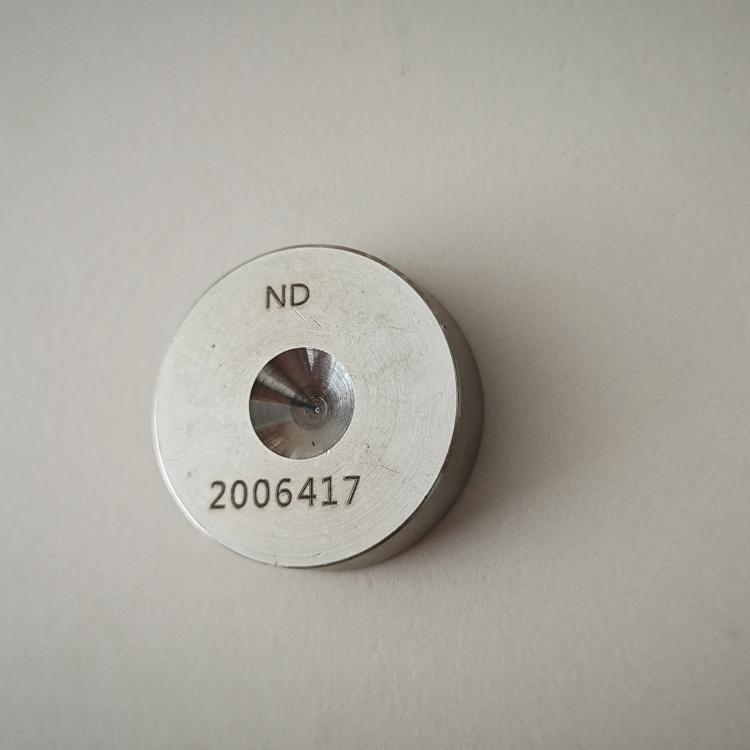
Polycrystalline diamond (PCD) wire drawing dies are revolutionizing wire manufacturing by offering unmatched durability, precision, and efficiency. Unlike conventional tungsten carbide dies or natural diamond alternatives, PCD dies combine synthetic diamond’s extreme hardness with a uniform microstructure, ensuring consistent wear resistance and minimizing surface defects on drawn wires. This makes them ideal for high-speed, high-volume production of non-ferrous metals like copper, aluminum, and their alloys, as well as specialty materials such as plastics and fibers.
Key advantages of PCD dies over traditional wire drawing dies include longer service life (50–500x that of TC dies for non-ferrous applications) and reduced downtime due to fewer die changes. Their low-friction properties also decrease lubrication needs, lowering operational costs. While natural diamond wire drawing dies excel in ultra-fine wire applications requiring exceptional surface finish, PCD dies offer a cost-effective alternative without compromising performance, especially in demanding environments where thermal stability and impact resistance are critical.
PCD dies’ adaptability extends to diverse wire geometries, from round to complex profiles, ensuring minimal deviation in diameter and roundness. By maintaining tighter tolerances and enhancing wire consistency, PCD technology directly improves downstream processes like stranding, insulation, and finishing. As industries prioritize sustainability, the extended lifespan of PCD dies also reduces material waste, aligning with eco-conscious manufacturing goals.