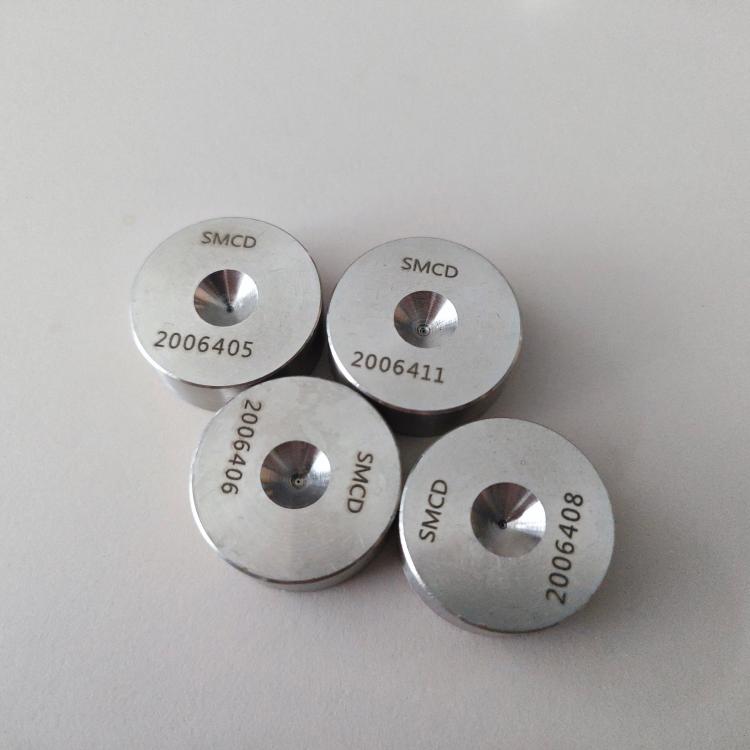
Proper maintenance of hard alloy drawing dies is pivotal to ensuring dimensional accuracy, surface finish, and operational longevity in metalworking processes. This guide outlines actionable strategies for preserving three critical die types: Wire Drawing Dies, Premium PCD Wire Drawing Dies, and Tungsten Carbide Dies, emphasizing practicality over automation.
1. Routine Cleaning & Lubrication
For standard Wire Drawing Dies, residual metal particles and cooling agents often accumulate in the die bore. Use non-abrasive solvents and soft-bristle brushes to dislodge debris, avoiding harsh chemicals that may degrade die coatings. Apply a thin layer of graphite-based lubricant post-cleaning to reduce friction during drawing. Premium PCD Dies, while more wear-resistant, require ultrasonic cleaning to remove stubborn deposits without damaging their diamond matrix.
2. Wear Inspection & Alignment Checks
Tungsten Carbide Dies demand regular inspection for edge chipping or bore deformation. Measure die geometry with precision gauges; deviations beyond 5% indicate replacement needs. For PCD Dies, monitor surface roughness using profilometers—increased Ra values signal diamond layer erosion. Align dies horizontally and vertically using laser calibration tools to prevent wire slippage and uneven wear.
3. Temperature & Storage Protocols
Avoid thermal shock by preheating dies to 150–200°C before use, especially for high-carbon steel wires. Post-operation, store dies in climate-controlled environments (40–60% humidity) to prevent corrosion. Premium PCD Dies are sensitive to humidity fluctuations; desiccant-filled containers are recommended for long-term storage.
4. Die-Specific Adjustments
Tungsten Carbide Dies excel in high-pressure applications but require frequent re-polishing of the entrance cone to maintain wire guidance. PCD Dies, optimized for non-ferrous metals, need periodic dielectric testing to ensure electrical insulation integrity. Replace worn backup rings in multi-die setups to distribute load evenly.
Pro Tip: Implement a die rotation schedule, alternating between primary and backup dies to extend service intervals. Document wear patterns to predict maintenance cycles, reducing unplanned downtime.
By integrating these practices, manufacturers can maximize die lifespan while sustaining product quality. Attention to material-specific handling and environmental controls remains the cornerstone of cost-effective die management.