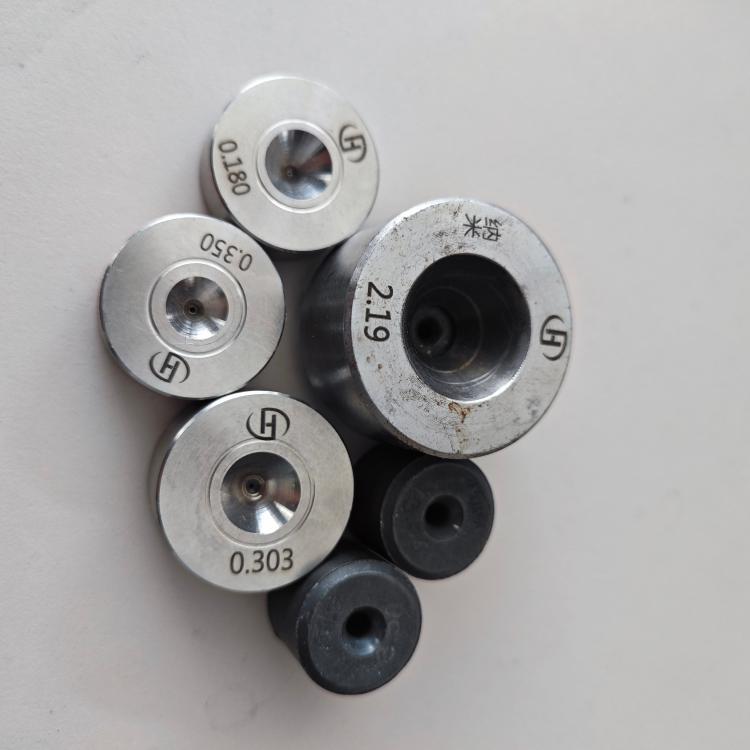
1. Wire Drawing Dies
Traditional dies, often made of tungsten carbide (TC) or natural diamond, suit low-to-medium production runs. TC dies offer durability for ferrous metals, while diamond dies excel in precision for non-ferrous materials like copper or aluminum. Regular inspection for wear patterns and lubrication with oil-based solutions ensures longevity.
2. PCD Wire Drawing Dies
Polycrystalline Diamond (PCD) dies are engineered for high-speed, high-volume operations. Their composite structure provides exceptional wear resistance, reducing downtime by 30–50% compared to TC dies. Ideal for stainless steel or hard alloys, PCD dies demand rigorous cooling systems to manage heat buildup during rapid drawing.
3. Coated Wire Drawing Die
Coated variants, such as titanium nitride (TiN) or diamond-like carbon (DLC), enhance performance by minimizing friction. These coatings extend die life in abrasive environments, particularly for micro-drawing applications. Operators must avoid abrasive cleaning agents to preserve coating integrity.
Selection Criteria
- Material Compatibility: Match die hardness to wire material (e.g., PCD for hardened steel).
- Production Scale: PCD for mass production; coated dies for specialized finishes.
- Maintenance Protocols: Daily inspection of die geometry and lubrication systems.
By aligning die type with operational priorities, manufacturers can reduce material waste by up to 20% and ensure consistent product quality. Regular calibration of drawing forces and temperature controls further optimizes performance across all die categories.