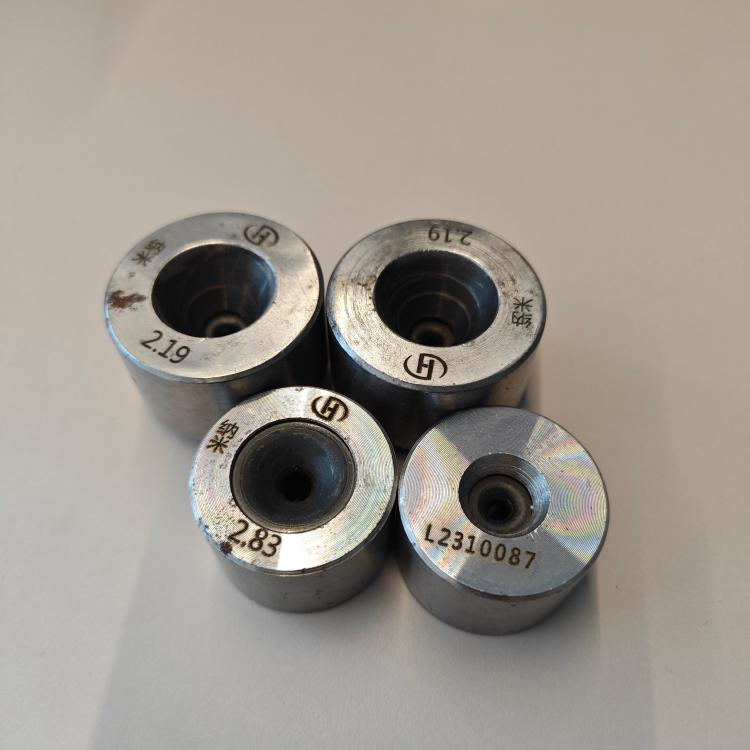
Premium PCD Wire Drawing Dies elevate performance further. By optimizing diamond grain size (2–30 µm) and binder content, manufacturers achieve ultra-smooth finishes (Ra < 0.1 µm) critical for medical device components or high-speed data cables. These advanced dies withstand temperatures up to 600°C without deformation, making them ideal for continuous casting lines or multi-pass drawing processes.
While Natural Diamond Wire Drawing Dies remain relevant for ultra-fine wire (<0.05mm) applications, their limitations are pronounced. Natural stones vary in hardness and thermal stability, leading to inconsistent wear and higher breakage rates. PCD’s synthetic uniformity eliminates these risks, offering predictable lifespans and reducing downtime.
Key Applications:
- Automotive: High-conductivity battery cables and EMI shielding wires.
- Telecom: Low-loss coaxial cable cores.
- Energy: Superconducting material processing.
Maintenance Insights:
- Rotate dies every 500 km of wire drawn to prevent edge wear.
- Use ultrasonic cleaning to remove metal shavings without abrasive damage.