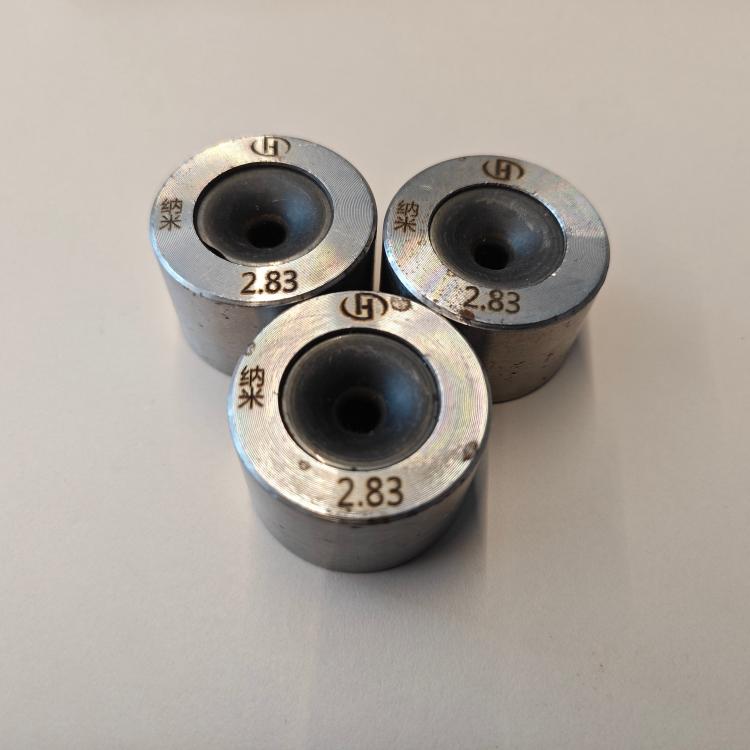
Selecting the right material for Wire Drawing Dies is critical to achieving precision, durability, and cost-efficiency in metalworking. Advancements in nanotechnology and diamond composites have expanded options beyond traditional carbide, enabling tailored solutions for diverse industries.
Standard Wire Drawing Dies
Tungsten carbide remains the go-to for general-purpose applications, such as copper or aluminum wire production. Its balance of hardness and toughness suits moderate-speed processes in construction or automotive sectors. However, carbide’s limited thermal resistance makes it less ideal for high-temperature alloys.
PCD Wire Drawing Dies
Polycrystalline Diamond (PCD) dies excel in abrasive environments, offering 50–100x longer lifespans than carbide. With a hardness exceeding 8,000 HV, PCD dies are indispensable for stainless steel, titanium, or nickel-based alloys. Aerospace and renewable energy sectors rely on them for defect-free wires in turbine components or battery grids.
Nano Wire Drawing Dies
For ultra-fine wires (≤0.05mm), Nano-structured dies integrate diamond-like carbon (DLC) coatings or nanocrystalline substrates. These reduce friction by 30%, enabling high-speed drawing of gold, platinum, or medical-grade polymers. Semiconductor and electronics industries adopt them for bond wires and micro-electromechanical systems (MEMS).